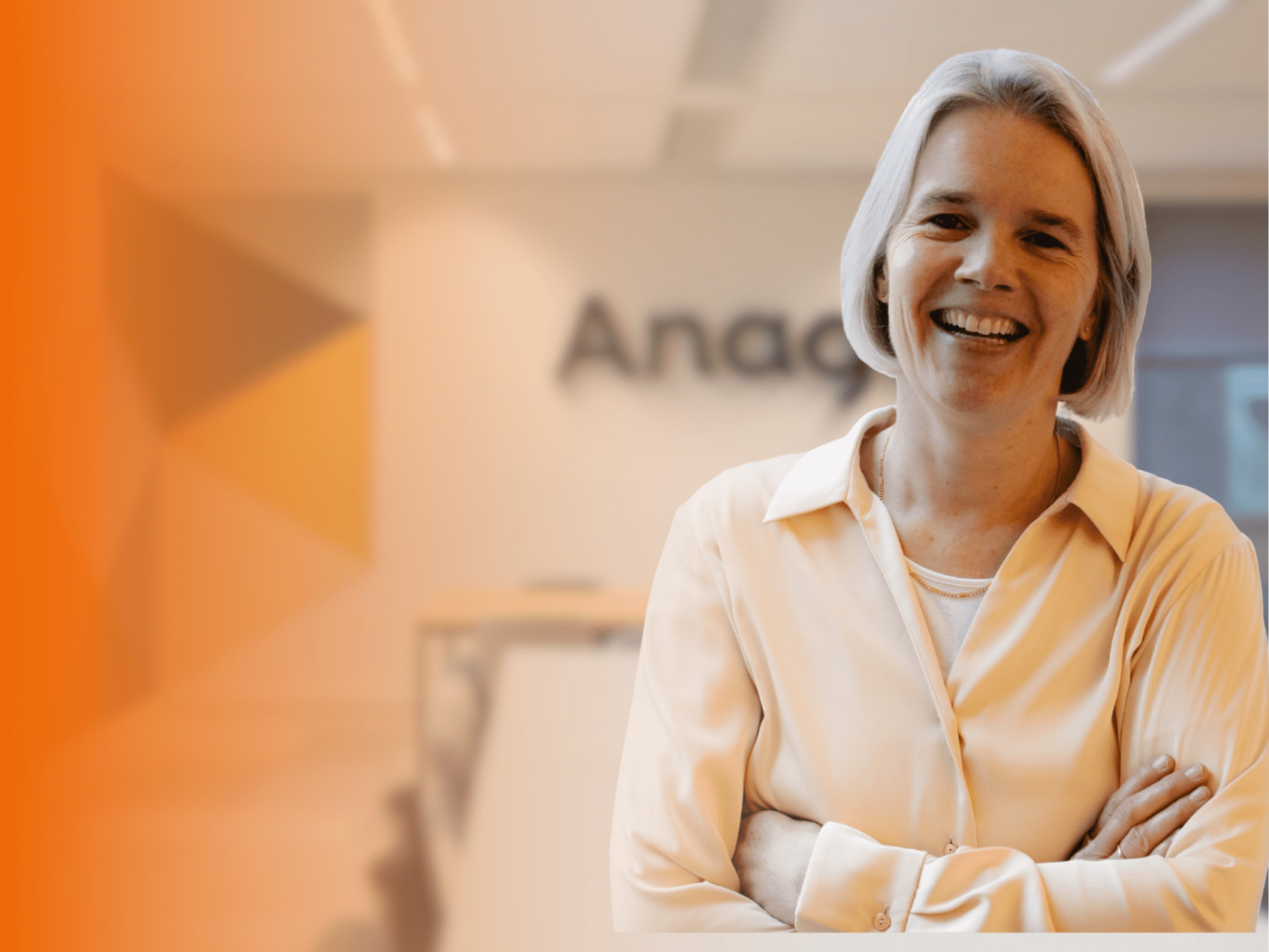
“From a safe pair of hands to strategic partner”: MAT maturity insights from Anago’s CEO
In this blog, we harness insights from Anago's CEO, Ninette van der Velden, as a base to explore MAT maturity: what it takes to move from slow and steady to strategic authority – and how the right tools and support can unlock a maturity shift that is felt all the way to the classroom.
If you asked a group of MAT CFOs how they’d like to be seen by their colleagues, the same phrase is likely to come up again and again: ‘I’m a safe pair of hands.’ The numbers add up, payroll runs, auditors are calm and the board sleeps at night.
It's true that the responsibility of a CFO is, ultimately, to steer the financial ship through often choppy waters. But our CEO, Ninette van der Velden, feels that there’s a sea change taking place. With decades of experience in the education sector – and having worked closely with trusts in the Netherlands and the UK – her take is that while being a safe pair of hands is non-negotiable, “It cannot and should not be the ceiling for CFOs.”
Proactivity is the new ‘must have’
"As the relationship between a CFO and the board evolves, you’ll see board members and trustees elevate their own understanding of the trust."
The real test of a trust’s robustness goes beyond reliability. Long-term thinking and innovation should also come into play, knitting together finances, resources and the curriculum to form a coherent and forward-thinking strategy.
The difficulty for many finance leaders though, is that they didn’t design the environment they now have to manage. Instead, they often inherit a patchwork of spreadsheets, legacy tools and external support, and are then told to “keep things stable”. Transitioning towards a more strategic outlook is therefore a real challenge when the day-to-day requires so much time and resources.
The trusts that Ninette has seen successfully mature over time have not cast aside the need for a safe pair of hands, but instead have used it as a core foundation. “The board still needs finance teams to be diligent,” Ninette says. “But they also need you to be the person who can say: this is what proactivity looks like, and this is what inaction looks like.”
Having candid conversations is deeply important to improving budgeting within a trust – particularly when they are grounded in the reliable data that facilitates long-term thinking. “As the relationship between a CFO and the board evolves, you’ll see board members and trustees elevate their own understanding of the trust, ask more insightful questions, and so demonstrate a more mature approach to the finance team’s own strategy.”
The moment finance becomes truly strategic
"A budgeting tool alone is not a magic solution."
A real turning point in the maturity journey, in Ninette’s experience, is when finance stops being seen as a back-office arm of a trust, and is instead treated as a leading decision-maker. This can be challenging with so many voices at the table, but when a trust matures, it’s the end users – i.e. children in classrooms – who end up feeling the benefits.
“A budgeting tool alone is not a magic solution,” Ninette says. “You can give a trust a powerful budgeting and forecasting platform, but if their internal processes are weak, if they don’t collaborate, and if finance isn’t given a voice, a trust won’t be able to maximise the effectiveness of the platform.”
With more robust internal processes comes more clarity. Finance teams need to be granted permission and space to discuss uncertainty, scenarios and trade-offs, and their conclusions should be factored seriously into decision-making for a trust. Scenario planning, for example, can become part of the regular dialogue between a CFO and the board, rather than being called upon only as a reaction to crisis.
When finance leaders are invited into curriculum and staffing conversations earlier, their role changes. Beyond standard reporting, CFOs and FDs at mature trusts are expected to offer strategic insight and long-term thinking.
Anago’s processes have shifted to support this maturity curve within trusts. “Over time, we have evolved the role of our implementation consultants to meet the changing needs of trusts,” Ninette says. “They don’t just configure the tool for finance teams – they also support the trust in understanding why they are not utilising certain functions, what is missing in their wider internal processes, and how they can take the next step in their maturity journey. Because ultimately, we want to strengthen the capability of our trust partners, rather than taking the control away from them.”
Tools, people and culture on the same curve
"What really makes the difference is if you have buy-in from everyone to improve the organisation over the long-term."
The maturity journey of a trust is a collective effort, when tools, people and culture move together. Culture shifts remain a challenge for any organisation, but Ninette believes that having a partner like Anago can help. “When we work with trusts, we aren’t just a software vendor – we’re a partner,” she says. “We need them and they need us, so the relationship is mutual.”
Having a budgeting and planning partner that values your success, rather than the transaction of a sale, is key – and something Anago prides itself on. “We work alongside trusts to improve the outcome for everyone involved in the organisation – finance teams, decision-makers, school staff, and most importantly the students,” says Ninette. “What really makes the difference is if you have buy-in from everyone to improve the organisation over the long-term.”
Of course, strategic direction comes from the top, and this is informed by detailed reporting that can be pulled from platforms like Anago. But a MAT can be more than the sum of its parts if its maturity development is ingrained within its broader culture. With a clear, shared model of finances and staffing, and processes that people recognise and trust, a CFO can work with their fellow leaders to drive a trust forward.
Where is your trust in its maturity journey? Get in touch today to speak to one of our experts about where you are, where you’d like to be – and what a partnership with Anago might look like for you.

Charlie Cottrell
Marketing & Communications Consultant | Driving Strategic Budgeting & Planning Solutions For UK Education.
Curious what Anago can do for you?


Using AI to support financial management
Katie Hutton talks to Thomas de Nooij about the benefits of using AI to support finance functions within a school, and illustrates how FD Forum members can share information and provide support to each other.


A board-ready budget narrative: how to explain risk, reserves and tough choices clearly
By the time a budget reaches the board, most of the technical work has already taken place. Assumptions have been tested, staffing plans reviewed, income lines checked, pressure points discussed and draft positions refined with senior leaders and finance colleagues.
The remaining challenge is not simply to present the numbers accurately. It’s to help trustees understand what those numbers mean.

How small trusts can build a 2026–27 budget with fewer surprises
For small academy trusts, budget season is rarely just about the numbers. It can also be about keeping the trust steady, giving trustees confidence, and avoiding that sinking feeling when the best laid plans start to go awry.